
How to Build a Parallel Coil | Vape School

Ready for the next level of flavor? Going from a single coil to a dual coil puts two coils on the deck, wired in parallel. You get more coil heating your cotton, which means more vapor and fuller flavor. It also means twice the building work and a bigger demand on your battery.
This step-by-step guide covers what a parallel build is, the tools you need, how to build and install two matching coils, and the resistance and battery checks to make before you vape.
Prerequisite: if you haven’t built a coil before, start with how to build a basic coil, then come back here.
Prefer to watch? Watch ZampleBox Vape School videos on YouTube.
Short version: Two identical coils wired in parallel give you half the resistance of one coil. Build two matching coils, install them symmetrically, check the resistance, even out any hot spots, then wick. Because the resistance drops, your battery has to deliver more current, so check its limits before you fire, especially on a mechanical mod.
What parallel means
In a dual-coil RDA (rebuildable dripping atomizer), each coil runs from the positive post to the negative post. The current splits and flows through both coils at the same time, which is what makes it a parallel circuit.
Wiring coils in parallel lowers the total resistance. For two identical coils, the total is exactly half the resistance of one:
- Two 1.0-ohm coils in parallel come to 0.5 ohms
- Two 0.6-ohm coils in parallel come to 0.3 ohms
- Two 1.4-ohm coils in parallel come to 0.7 ohms
For coils that don’t match, the formula is 1 ÷ total = 1 ÷ coil A + 1 ÷ coil B. A 1.0-ohm coil paired with a 0.5-ohm coil, for example, comes out at about 0.33 ohms. Mismatched coils also heat unevenly, which is why matching them matters so much.
So when you plan a dual build, aim each coil at roughly double your target. Want to land around 0.5 ohms? Build two coils of about 1.0 ohm each.
What you’ll need
- An RDA with room for two coils
- A mod, ideally a regulated one for your first dual builds
- An ohm reader, or a regulated mod that displays resistance
- 26-gauge Kanthal wire
- A 1/8-inch screwdriver to wrap the coils around
- An Allen key for the post screws, if your deck uses them
- Wire snips
- Ceramic tweezers
- Japanese or organic cotton
- Scissors
- Your favorite vape juice
Building up your tools? See our DIY coil building kit guide, and compare wicking options in Japanese cotton pads vs. organic cotton balls.
How to build a dual parallel coil
1. Wrap two identical coils
Cut two equal lengths of wire. Wrap each one around the same screwdriver shaft with the same number of wraps, in the same direction, keeping the wraps tight and even. The more alike the two coils are, the more evenly they’ll heat.
2. Prep the deck
Take the RDA off your mod and put it on your ohm reader. Loosen the post screws with your Allen key or screwdriver.
3. Install the first coil
Seat the legs in the posts, center the coil over its airflow, and tighten the screws. Keep the coil clear of the deck and the posts.
4. Install the second coil to match
Mirror the first coil on the other side of the deck: the same height, the same distance from center and the same leg length. Sliding the screwdriver back through each coil helps line them up before you tighten.
5. Trim and check the resistance
Snip the legs close to the posts. Your reading should be roughly half of what one of the coils would read on its own. If it jumps around, a screw is loose. If it’s far lower than expected, a coil may be touching the deck, a post or the top cap.
6. Pulse and even out the glow
Fire in short pulses at low power with no cotton in place. Both coils should start glowing at the same time, spreading evenly from the center. Pinch or strum any hot spots with ceramic tweezers; our guide on getting hot spots out of coils walks through it. If one coil lags, check its wraps, its height and its screws.
7. Wick and saturate
Thread cotton through each coil so it’s snug without pulling the coil out of shape. Trim the tails with scissors so they reach the juice well, tuck them in, and saturate both wicks with vape juice.
8. Start low
Put the top cap back on. On a regulated mod, start at a low wattage and work up until the flavor and warmth feel right.
A variation: parallel-wire coils
You’ll also hear “parallel coil” used for a single coil wrapped from two strands of wire laid side by side. Each strand is its own path for the current, so a two-strand coil comes out at about half the resistance of the same coil made from one strand. It’s another way to add surface area and bring resistance down, and the same battery checks apply.
Check your battery before you vape
Halving the resistance roughly doubles the current your battery has to deliver at the same voltage. On a mechanical mod with a fully charged battery at 4.2 volts, a 0.5-ohm build draws 8.4 amps, and a 0.25-ohm build draws 16.8 amps.
Make sure that number sits within your battery’s continuous discharge rating. Mechanical mods have no electronic protection, so your build and your battery are the only safeguards. Read mechanical mod battery safety and our recommended batteries for vaping before you build low.
Bottles worth trying
Dual coils go through juice faster than a single coil, so keep a few bottles on hand. Many builders reach for high-VG juice on dual builds; our guide to PG and VG explains why.
-
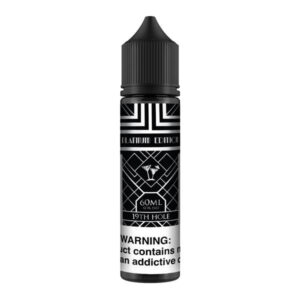
19th Hole - Black Label Platinum Edition
Price range: $8.99 through $29.99 Select options This product has multiple variants. The options may be chosen on the product page -
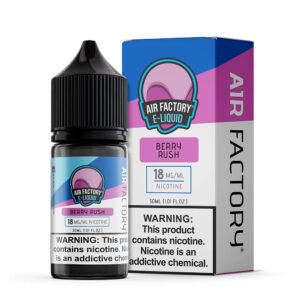
Air Factory Salt Berry Rush 30ml Nic Salt
$12.99 Select options This product has multiple variants. The options may be chosen on the product page -
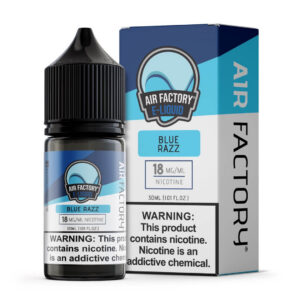
Air Factory Salt Blue Razz 30ml Nic Salt
$12.99 Select options This product has multiple variants. The options may be chosen on the product page
Common questions
Why do my two coils glow at different times?
They aren’t matched closely enough. Check that both have the same number of wraps and inner diameter, sit at the same height, have similar leg lengths and are tightened firmly.
Can I use two different coils in a dual build?
It’s best not to. Mismatched coils heat unevenly, and the lower-resistance coil carries more of the current, which can lead to hot spots and uneven wicking.
Does a dual coil use more battery?
Usually, yes. A lower total resistance and more heating surface mean more current and more power, so batteries drain faster.
Do I have to use 26-gauge wire?
No, other gauges work too. Thicker wire (a lower gauge number) gives a lower resistance for the same coil, so recheck your target and your battery limits whenever you change wire.
WARNING: This product contains nicotine. Nicotine is an addictive chemical. For adults 21+ only.