
What Is E-Liquid?
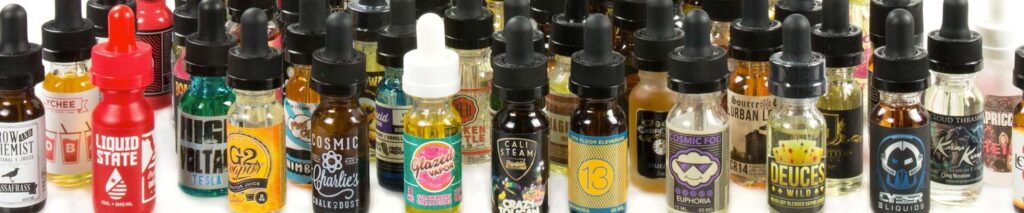
E-liquid is the liquid that goes in your vape. Your device heats it and turns it into the cloud you inhale. You will also see it called e-juice or vape juice, and all three names mean the same thing.
Almost every bottle is built from the same four ingredients. This guide explains what each one does, clears up a few common mix-ups, and shows you how to read a label so you can pick a juice that suits your device.
Short version: E-liquid is a base of propylene glycol (PG) and vegetable glycerin (VG), plus flavorings and, if you choose, nicotine. PG carries flavor and throat hit, VG makes the vapor, flavorings set the taste, and the nicotine strength is printed on the label in mg/ml.
How e-liquid becomes vapor
Every vape, from a disposable to a box mod, works the same basic way. A battery sends power to a small metal coil. The coil sits in a wick, usually cotton, that soaks up e-liquid. When the coil heats, the liquid in the wick turns into the cloud you inhale, and fresh liquid soaks back in.
Strictly speaking, that cloud is an aerosol, a mist of tiny droplets, rather than a true vapor. Vapers call it vapor anyway. Because the whole process depends on the wick staying wet, the thickness of your e-liquid matters more than you might expect.
The four ingredients
Propylene glycol (PG)
PG is a thin, colorless, nearly odorless liquid made by reacting propylene oxide with water. You will find it in foods, cosmetics and medicines. In e-liquid, PG carries flavor well and gives a stronger throat hit, the catch at the back of the throat that many vapers look for. Because it is thin, it also wicks quickly.
Common mix-up: propylene glycol is not ethylene glycol, the toxic chemical in most antifreeze. The names sound alike, but they are different compounds.
Vegetable glycerin (VG)
VG, sometimes spelled glycerine, is a thick, clear liquid with a slightly sweet taste. Chemically it is a simple polyol, a type of sugar alcohol, and it is usually made from plant oils. It shows up in foods, toothpaste, soaps and cosmetics. In e-liquid, VG makes thicker vapor and a smoother throat hit, and it can soften flavor a little.
Common mix-up: vegetable glycerin is not vegetable oil. Oils of any kind do not belong in a vape.
One note on all those everyday uses: eating an ingredient or putting it on your skin is not the same as heating and inhaling it, so treat that list as background, not as a verdict on vaping.
Flavorings
Flavorings give e-liquid its taste, from strawberry and mango to custard, tobacco and menthol. Most are the same kinds of food-grade flavorings used in baking and confectionery, and they make up a small share of the bottle. Good makers layer several notes, so a juice might open with ripe fruit and finish with cream.
Food-grade tells you a flavoring is meant for food. It does not tell you how that flavoring behaves when it is heated and inhaled. Some makers state that their juices are made without diacetyl, a buttery flavoring compound that has been linked to serious lung disease in workers who breathed it in at flavoring and microwave-popcorn plants. If ingredients matter to you, favor brands that publish clear ingredient information.
Nicotine
Nicotine is optional. It is an addictive chemical that comes from the tobacco plant, and most nicotine in e-liquid is extracted from tobacco leaves. Some brands use synthetic, tobacco-free nicotine instead. Since 2022, the FDA has regulated both kinds as tobacco products.
Strength is listed in milligrams per milliliter (mg/ml). A 3 mg juice has 3 mg of nicotine in every milliliter, so a 30 ml bottle at 3 mg holds about 90 mg in total. Higher strengths also give a stronger throat hit. Nicotine comes in two main forms:
- Freebase nicotine, the traditional form, usually sold from 0 to 18 mg/ml. Sub-ohm vapers tend to use the low end of that range.
- Nicotine salts, a form that feels smoother at high strengths, commonly sold from 20 to 50 mg/ml for pod systems.
Nicotine-free (0 mg) juice is easy to find too. Our guides to nicotine strength and nicotine salts go deeper.
Reading the label and storing e-liquid
What to look for on the label
A label tells you most of what you need to know. Look for:
- Bottle size. Usually 30 ml for regular juice and nic salts. High-VG juice often comes in 60 ml or 100 ml+ bottles.
- Nicotine strength and type. The mg/ml number, and whether it is freebase or salt nicotine.
- PG/VG ratio. Often written as 50/50 or 70VG/30PG, so check which number comes first.
- Flavor notes. Many brands list the main notes, which makes it easier to find more of what you like.
- Nicotine warning. In the US, e-liquid that contains nicotine must carry a warning that nicotine is an addictive chemical.
- Child-resistant cap. Nicotine e-liquid sold in the US must come in child-resistant packaging.
For a closer look at ratios, read What Are PG and VG? and our guide to 50/50 e-liquid.
How to store e-liquid
E-liquid keeps best somewhere cool and dark with the cap tightly closed. Heat, light and air slowly change nicotine and some flavorings, which is why a juice can darken as it ages. A darker color on its own is normal, but if a bottle smells or tastes off, replace it.
- Store bottles out of reach of children and pets, and never in a food or drink container.
- Wipe up spills, and wash your hands if nicotine juice gets on your skin.
For shelf life and signs a bottle has turned, read How Long Does Vape Juice Last? Some complex flavors, such as custards and tobaccos, can also improve with steeping.
Matching e-liquid to your device
Pod systems and mouth-to-lung tanks
Small coils and tight airflow work best with thinner juice, so 50/50 blends and nic salts are the usual picks. Very thick, high-VG juice can wick too slowly in these devices and cause dry hits.
Sub-ohm tanks and rebuildables
Low-resistance coils run at higher power and vaporize more juice with every puff. They pair with high-VG juice, around 70% VG or more, at lower freebase strengths. High-strength nic salts are far too harsh in these setups. Our sub-ohm vaping guide explains why.
For a step-by-step approach, see How to Choose the Right E-Liquid.
Bottles worth trying
Fruit is the biggest flavor family in our shop, so it is an easy place to start. You can also browse all our vape juice by flavor, from dessert to menthol and tobacco.
-
12 Steps - Vapors Anonymous
Price range: $8.99 through $29.99 Select options This product has multiple variants. The options may be chosen on the product page -
19th Hole - Black Label Platinum Edition
Price range: $8.99 through $29.99 Select options This product has multiple variants. The options may be chosen on the product page -
7 Daze Reds Salt Series - Apple Strawberry - 30ml
$14.99 Select options This product has multiple variants. The options may be chosen on the product page
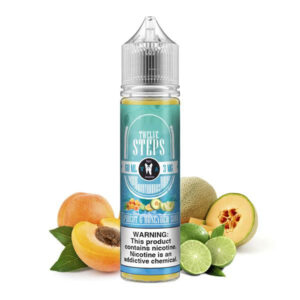
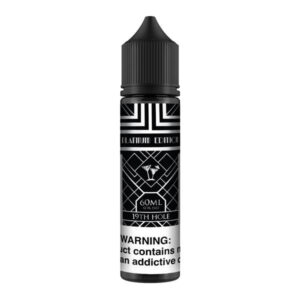
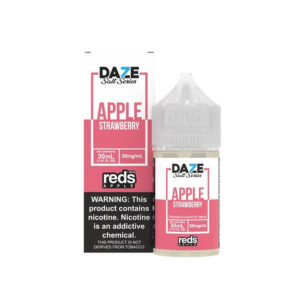
If you would rather not choose bottle by bottle, the Zamplebox Club sends bottles picked for your flavor profile every month. You can swap any bottle before it ships, and skip, pause or cancel anytime.
Common questions
Is e-liquid the same as vape juice?
Yes. E-liquid, e-juice and vape juice all mean the liquid you put in a vape.
Does all e-liquid contain nicotine?
No. Many juices come in a 0 mg version. Check the strength on the label, and keep in mind that nicotine is addictive.
What PG/VG ratio should I choose?
For pod systems and mouth-to-lung tanks, 50/50 is a dependable start. For sub-ohm tanks and RDAs, try 70% VG or higher.
WARNING: This product contains nicotine. Nicotine is an addictive chemical. For adults 21+ only.